Your Last Batch Is Data
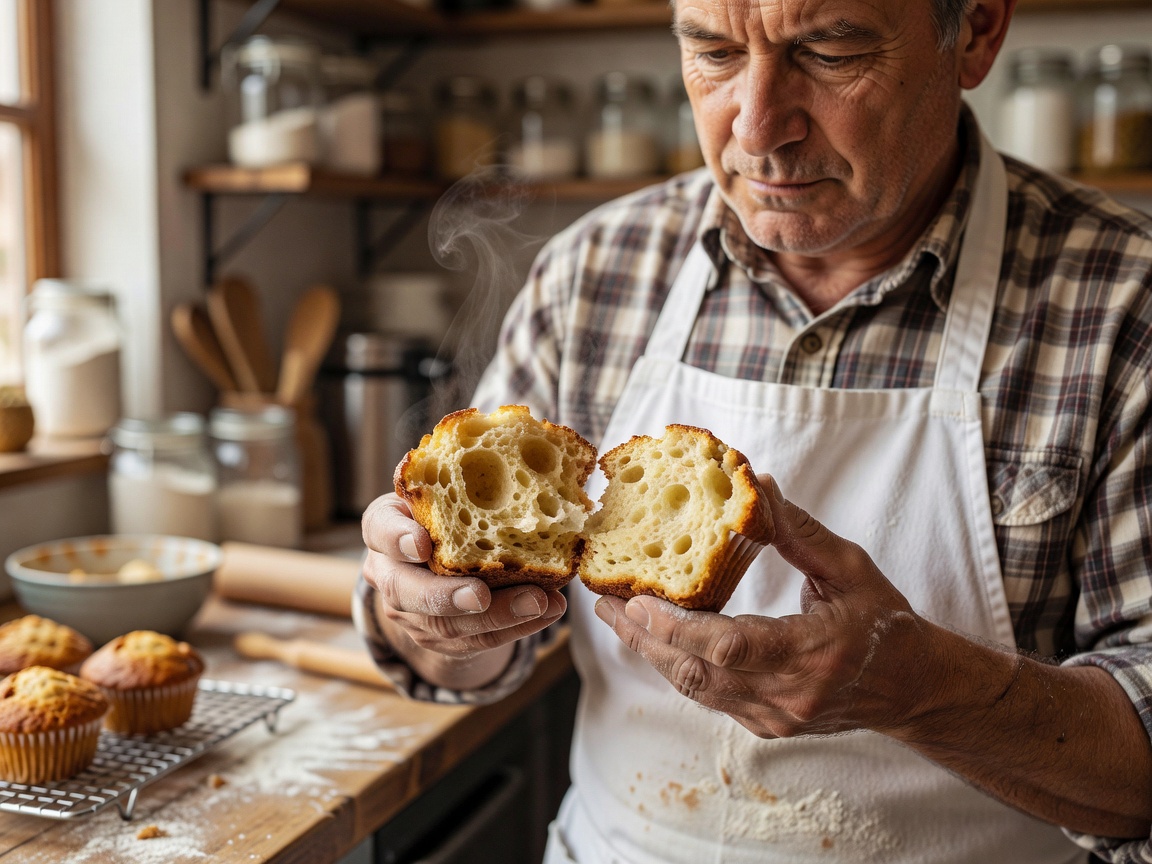
Before changing anything, cut one muffin straight down the middle with a serrated knife and look. The inside tells you more than the top. Are the holes tiny and even, irregular and tender, or long and vertical? Is the base damp? Did the dome crack, peak or stay flat?
Write down what you see, then decide which single variable to change. The diagrams below are drawn illustrations of common crumb patterns, not photographs of our results, so you can compare your own cross-section without guessing.
Three Crumbs, Three Stories
Change One Thing, See What Moves
Likely effects compared with our tested base. Results vary by oven and ingredients.
| Variable | Change | Usual effect | Status |
|---|---|---|---|
| Mixing | 12 strokes, lumps left | Open, tender crumb | Tested (base) |
| Fat | 90 g butter → 80 ml sunflower oil | Softer crumb that stays moist longer; less buttery flavour | Untested |
| Sugar | Reduce by 25 g | Less tender, paler tops; may dry sooner | Untested |
| Resting | Batter chilled overnight | Often taller, more domed tops | Untested |
| Oven start | 5 min at 200°C (180°C fan), then lower | Faster lift, better dome | Tested (base) |
| Fill level | Cases filled to the brim | Taller muffins, risk of overflowing tops | Untested |
| Acid | Yoghurt → milk | Less tender, milder tang; leavening balance changes | Untested |
From Tender Inside to Crunchy Top
Stop at lumpy
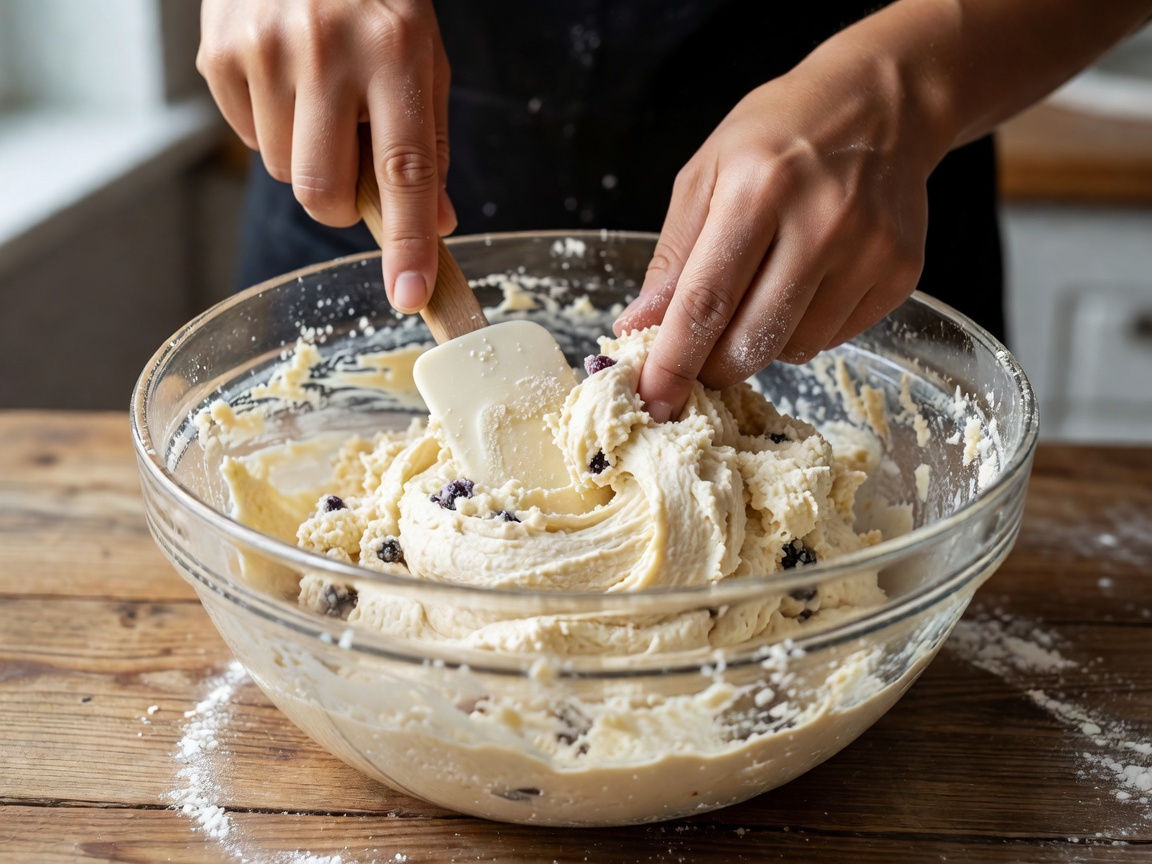
Wheat flour starts forming gluten the moment it meets liquid, and every extra stir strengthens it. For muffins you want only a little. Fold with a large spatula, scraping from the bottom, and stop while a few floury streaks remain; they disappear as you scoop. If you are adding fruit or a spark, fold it in during the last few strokes rather than afterwards.
Build height deliberately
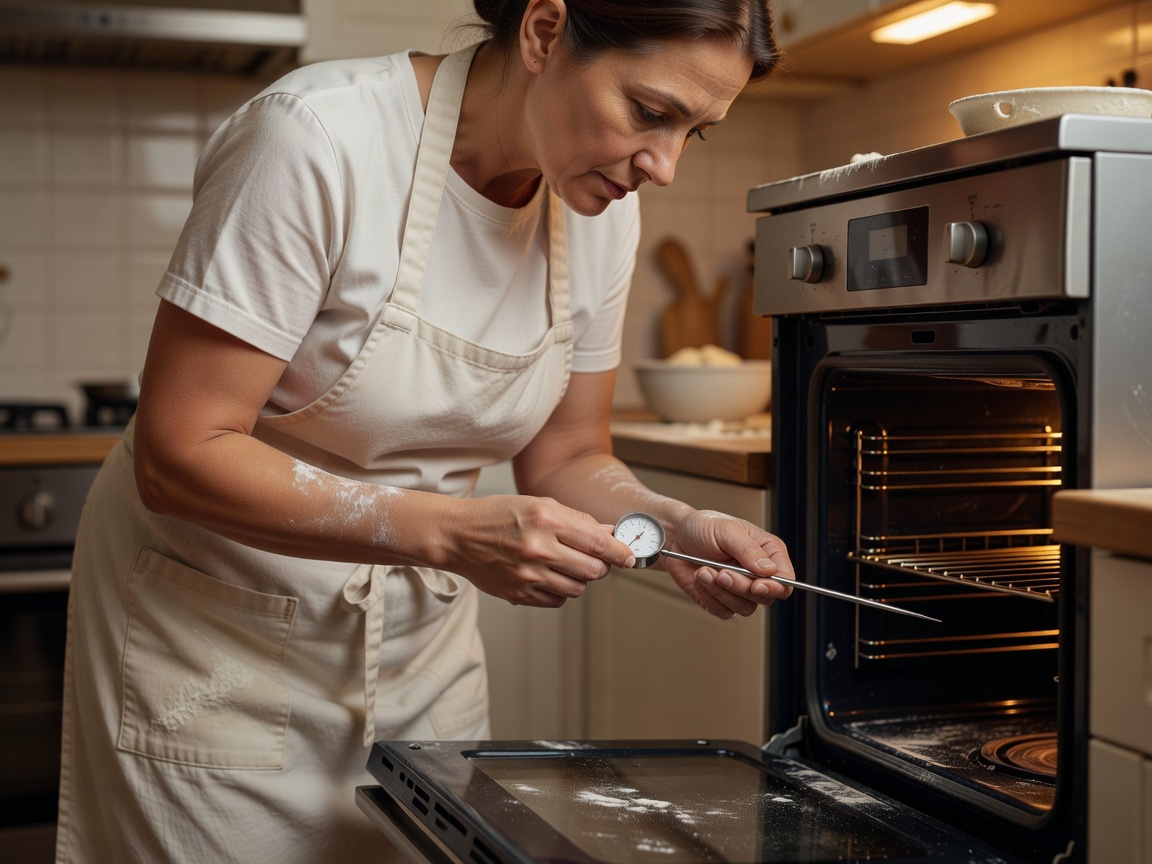
Tall domes come from a strong initial burst of heat, a batter thick enough to climb rather than spread, and well-filled cases. Our base uses a short blast at 200°C before lowering the temperature. An oven thermometer is worth having: many domestic ovens run 10–20°C away from the dial, which changes everything from rise to colour.
Add a contrasting top
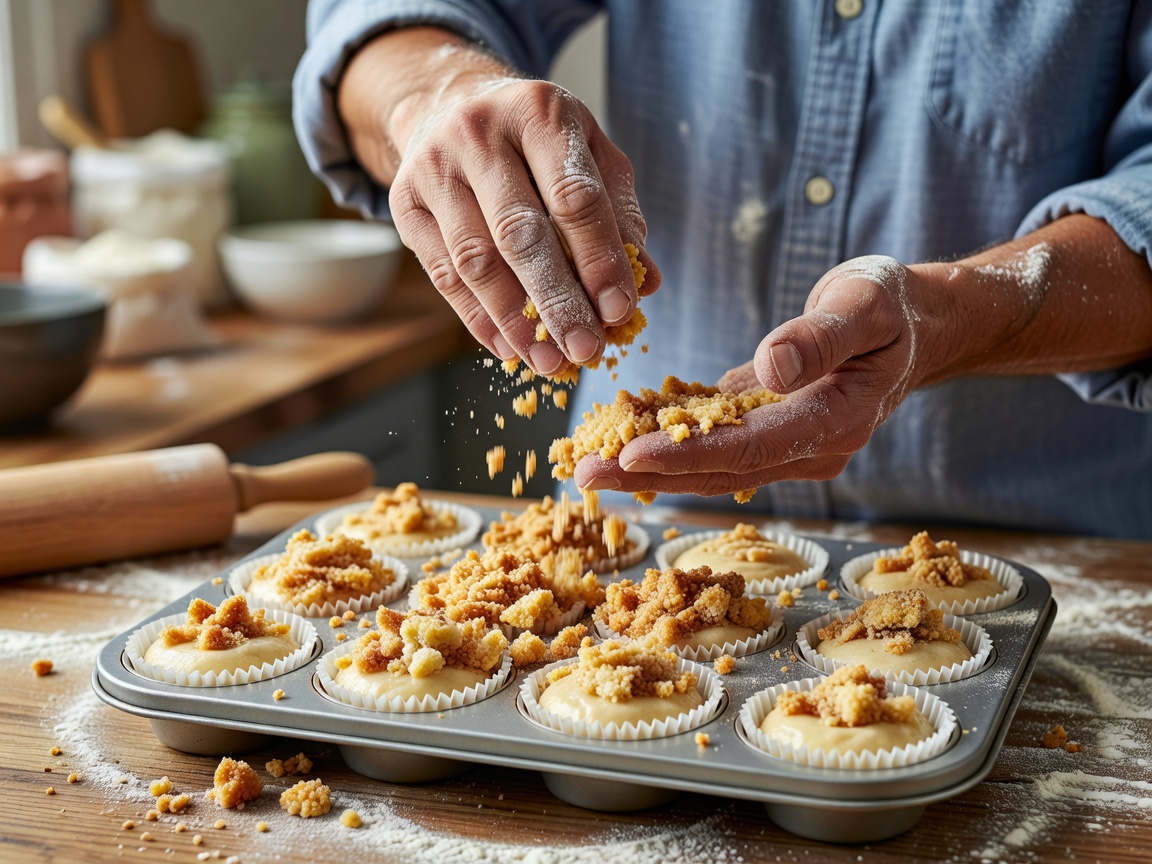
A crunchy top makes a soft crumb feel softer. For a simple streusel, rub 50 g cold butter into 75 g plain flour and 50 g demerara sugar until it forms clumps; this covers 12 muffins generously. Alternatives: a teaspoon of demerara per muffin, a few rolled oats, or chopped nuts pressed lightly on top. Toppings add weight, so apply them just before baking.
Your Texture Log
Copy these headings into a notebook. After three batches, patterns appear.
Before
Date, room temperature, variable changed, exact weights, mixing strokes, fill level.
During
Actual oven temperature, bake time, when the dome formed, any overflow.
After
Cross-section pattern, base moisture, top texture, taste warm and after 24 hours.