Not Every Flour Builds a Muffin
Plain wheat flour does two jobs at once: it provides starch that sets into crumb, and proteins that form gluten, the stretchy network that holds rising gas. Alternative flours change one or both of those jobs. Wholemeal flours carry bran, which absorbs extra liquid and interrupts gluten. Buckwheat, oat, almond, chestnut and teff contain no gluten-forming wheat proteins at all. Rye forms a much weaker network than wheat.
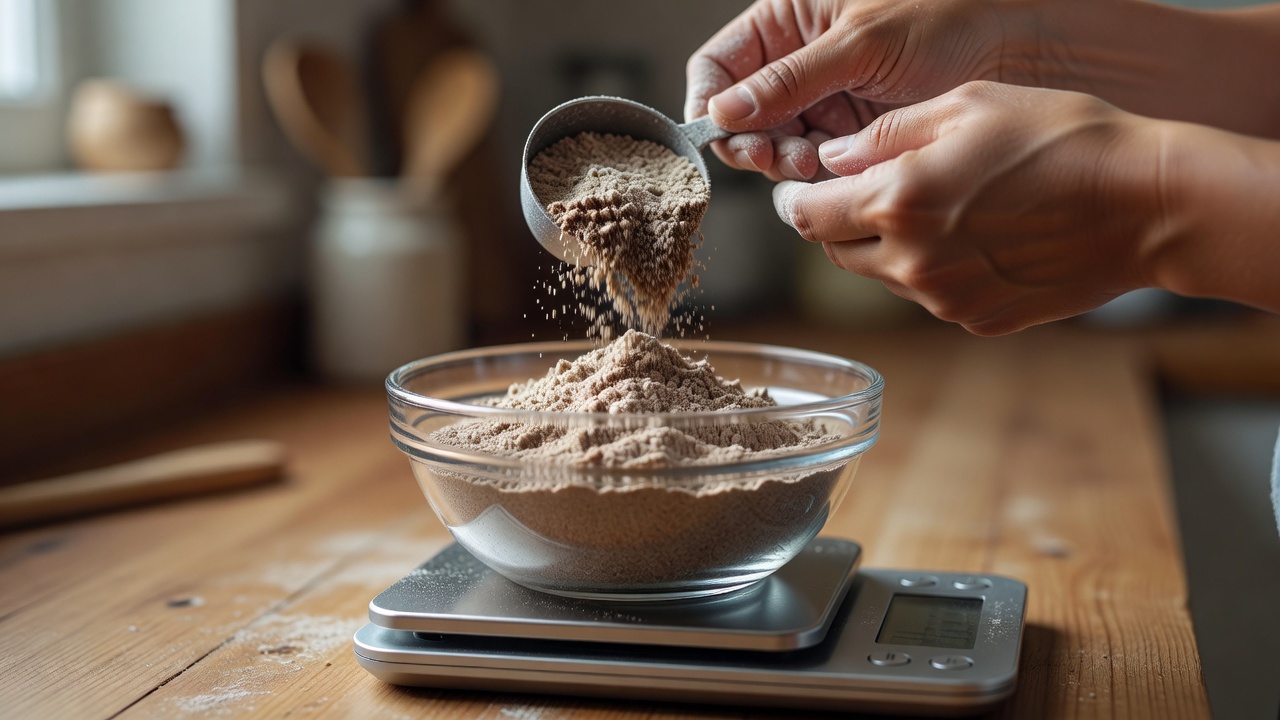
That is why a full swap often fails while a partial swap shines. Our rule: replace 25% of the flour by weight first. If you like the result, try 50% next time. Always weigh, because a cup of almond flour and a cup of plain flour weigh very different amounts.
Whole-grain and high-fibre flours benefit from a rest. Let the mixed batter stand for 20 minutes before scooping so the bran and starches can hydrate; it often reduces grittiness.
Alternative Flours Compared
Swap percentages refer to the 250 g of plain flour in our base recipe. Liquid adjustments are starting points.
| Flour | Gluten | Flavour | Start swap | Liquid | Likely effect | Status |
|---|---|---|---|---|---|---|
| Wholemeal spelt | Yes, more fragile than wheat | Sweet, nutty | 25% (62 g) | +1 tbsp milk | Slightly denser, pleasantly nutty | Tested |
| Wholemeal wheat | Yes | Wheaty, toasty | 25–50% | +1–2 tbsp | Heartier, more moist | Untested |
| Rye (dark or light) | Weak network | Earthy, slightly sour | 25% | +1 tbsp | Can turn gummy if overdone | Untested |
| Buckwheat | None (not a wheat) | Grassy, earthy | 20–30% | +1 tbsp | Darker, more crumbly | Untested |
| Oat flour | None, but often cross-contaminated | Mild, toasty | 25–30% | None | Softer, tender crumb | Untested |
| Ground almonds | None | Rich, marzipan-like | 25% | None | Moist, heavier; browns faster | Untested |
| Chestnut flour | None | Sweet, faintly smoky | 15–20% | +1 tbsp | Very tender; dry if overused | Untested |
| Teff | None | Malty, cocoa-like | 20% | +1 tbsp | Fine, moist crumb | Untested |
Let the Flour Choose the Fruit
Alternative flours have personalities. Pairing them with a matching flavour makes the experiment feel intentional rather than worthy.
Buckwheat + Blackberry
Buckwheat is the flour behind Brittany's savoury galettes, and its earthy flavour loves dark fruit. Replace 60 g of the plain flour with buckwheat, add 1 tbsp extra yoghurt, and fold in 150 g blackberries. Expect a darker, more crumbly muffin; the plain flour still holds it together.

Spelt + Apple
Our tested flour change: 62 g wholemeal spelt replacing 62 g plain flour, with 1 tbsp extra milk and a 20-minute rest. We found it slightly denser and noticeably nuttier than the base, with a good rise. Adding 150 g diced eating apple and ½ tsp cinnamon is a suggested next step that we have not yet logged.

Rye + Cherry + Cocoa
Rye's gentle sourness echoes cherry, and cocoa deepens both, a trio familiar from German and Scandinavian baking. Swap 62 g plain flour for rye, replace 20 g of the remaining plain flour with cocoa powder, and fold in 150 g pitted cherries. Mix especially lightly: rye batters turn gummy when overworked.

About Gluten-Free Muffins
Partial is not gluten-free
Every swap on this page still contains wheat flour. A 25% buckwheat muffin is not suitable for anyone avoiding gluten.
Full blends need a binder
Fully gluten-free muffins usually rely on a blend of flours and starches plus a binder such as xanthan gum. We have not yet tested a gluten-free version of our base, so we do not publish one.
Medical needs come first
For coeliac disease, use products certified gluten-free and follow guidance from organisations such as Coeliac UK. Oats in particular are often cross-contaminated.