Density, Moisture and Heat
Most filling failures come down to three forces. Density: a heavy filling dropped into thin batter sinks straight to the paper. Moisture: a loose, watery filling steams the surrounding crumb into a soggy pocket or boils out through the top. Heat: soft fillings such as chocolate or nut butter melt and spread before the batter around them has set.
The fix is rarely a new recipe. It is usually a thicker filling, a colder filling, a smaller amount, or better placement. Keep the base batter the same (our tested yoghurt base is thick enough to support most fillings) and change only the filling, so you can tell what worked.
The Three-Layer Method
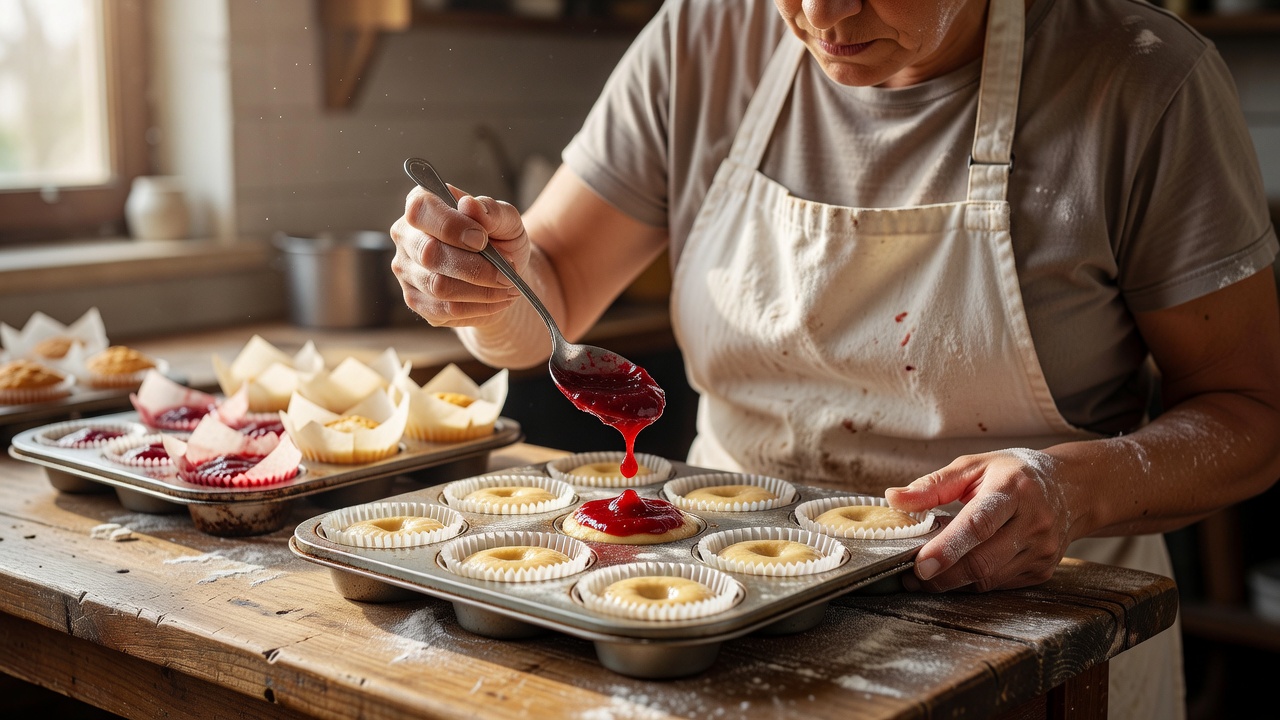
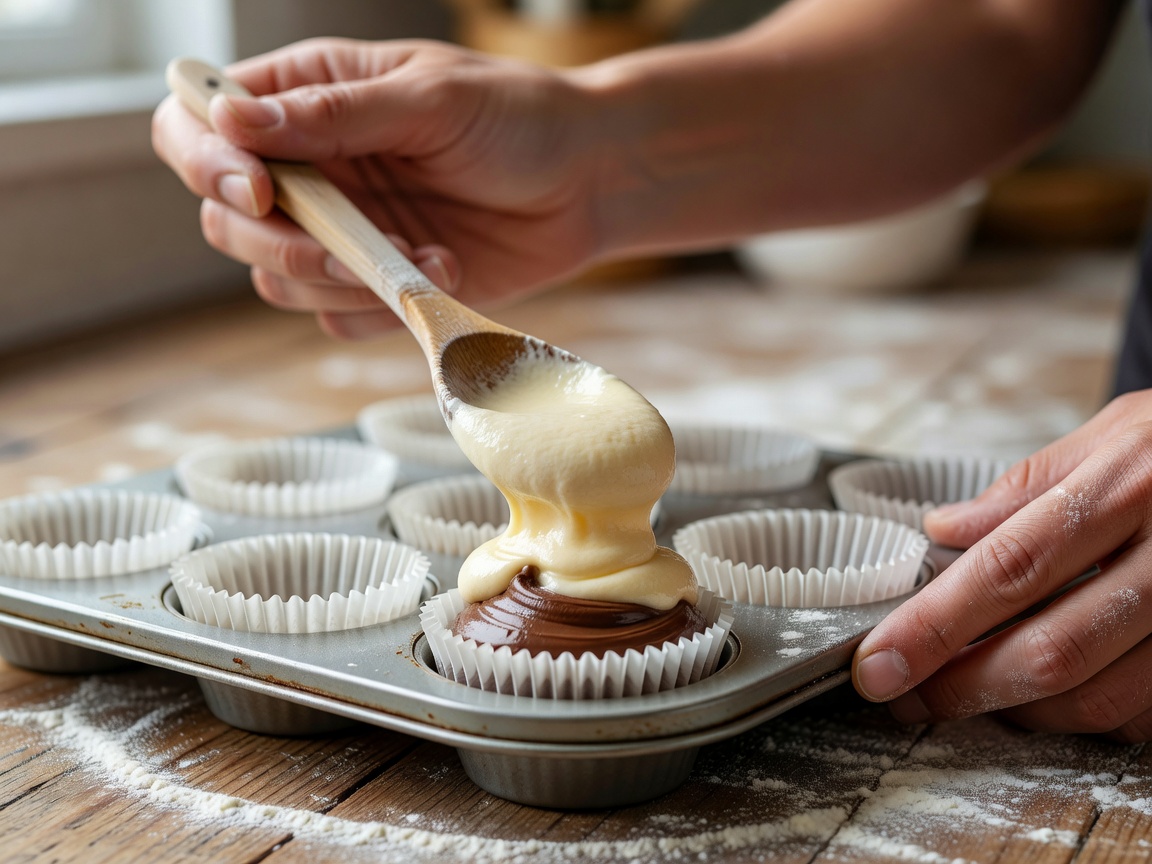
- Base layerSpoon about 1½ tbsp batter into each case and level it slightly with the back of the spoon.
- Centre the fillingAdd 1–2 tsp filling in the middle, keeping it at least 1 cm from the paper so it cannot leak down the sides.
- Seal the topCover with another 1½ tbsp batter, making sure no filling peeks through. Cases should be no more than three-quarters full.
- Bake and restBake as normal, then let filled muffins cool in the tin for 10 minutes. Fillings are much hotter than the crumb straight from the oven.
Filling Types Compared
Amounts are per standard muffin. Notes describe likely behaviour based on how each filling is built, not a guarantee in your oven.
| Filling | Preparation | Amount | Main risk | Status |
|---|---|---|---|---|
| Thick-set jam | Use straight from the jar; stir until smooth | 1–2 tsp | Slight sinking if batter is thin | Tested |
| Lemon curd | Chill well before using | 1 tsp | Soft, damp pocket | Untested |
| Sweetened cream cheese | 100 g full-fat cream cheese beaten with 25 g icing sugar; chill 20 min | 1 tbsp | Needs refrigeration after cooling | Untested |
| Frozen ganache discs | 100 g chocolate + 60 g double cream, piped into discs and frozen 1 hour | 1 disc | Hollow if disc is too large | Untested |
| Nut butter | Freeze teaspoon dollops on baking paper | 1 tsp | Allergen; spreads if not frozen | Untested |
| Thickened fruit compote | 100 g fruit + 1 tsp cornflour + 1 tbsp sugar, simmered until glossy, then cooled | 2 tsp | Leaks if not fully thickened | Untested |
Freeze It, Thicken It, Shrink It
Freezing soft fillings
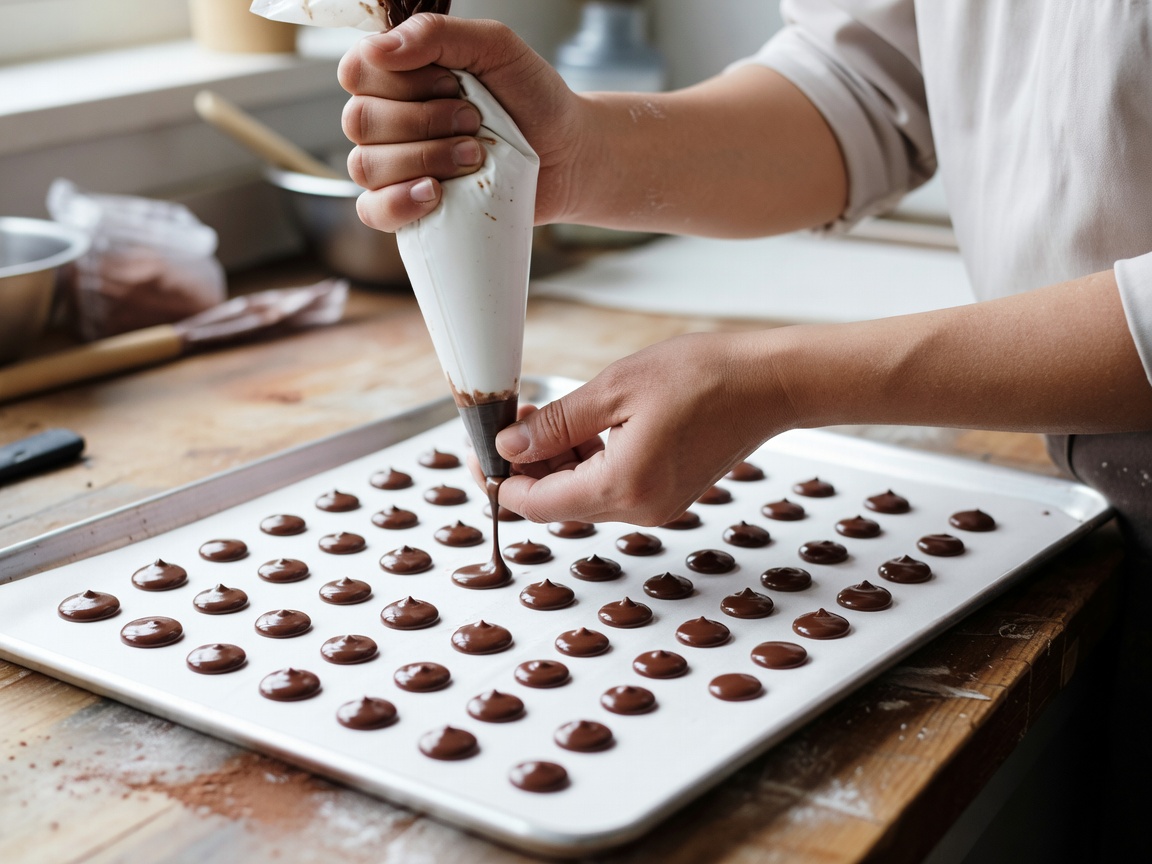
Ganache, nut butter and cream cheese fillings stay put far better when they go into the batter cold. Pipe or spoon portions onto a tray lined with baking paper and freeze them until firm, usually about an hour. Because the frozen centre takes longer to heat, the batter around it can set before the filling starts to flow.
Keep frozen portions small: around 2 cm across for a standard muffin. A large frozen disc can leave a damp or hollow gap.
Thickening fruit fillings
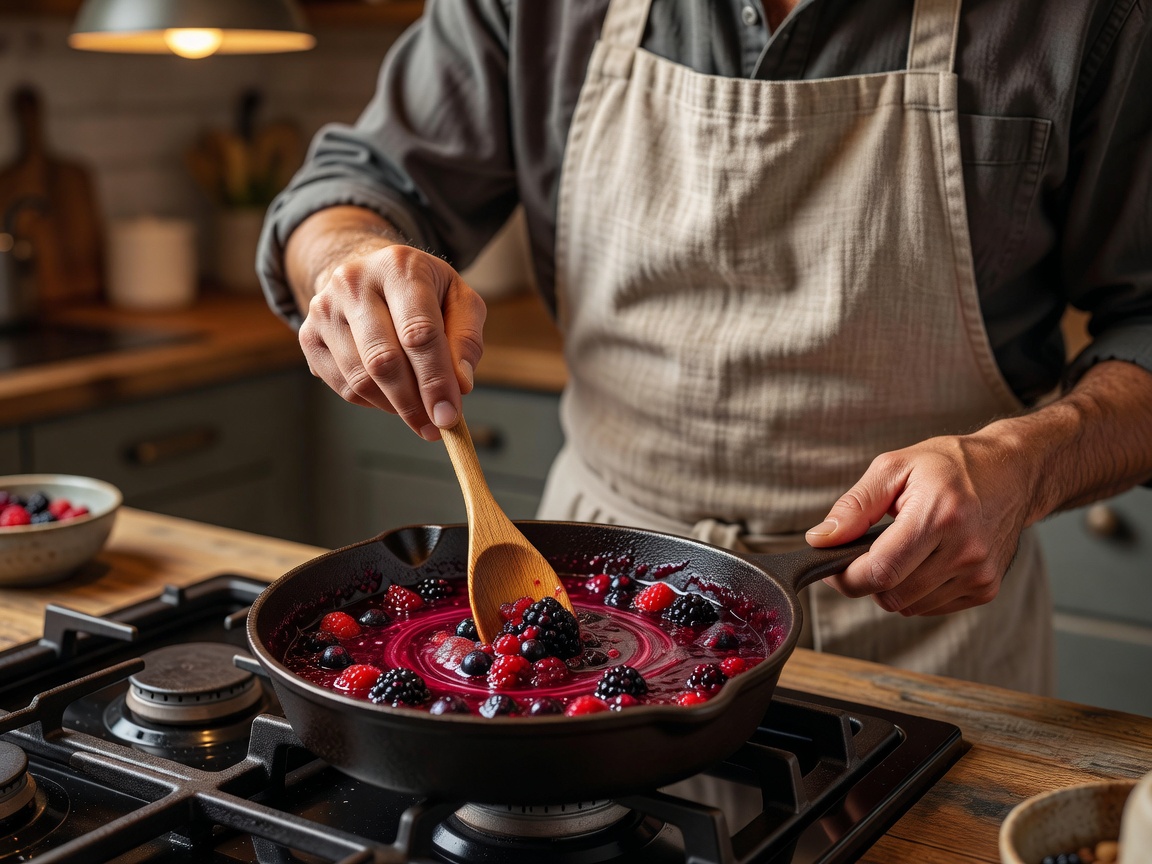
Fresh berries release juice as they heat. Cooking them briefly with cornflour turns that juice into a glossy, spoonable filling before it ever reaches the batter. Simmer until the mixture turns from cloudy to clear and coats the spoon, then cool completely. Warm filling will melt into the batter and lose its shape.
Shop-bought thick-set jam is the most forgiving starting point, which is why it is our tested filling.
Tested vs Suggested
Raspberry Jam Centre
Base recipe, three-layer method, 2 tsp thick-set raspberry jam per muffin. Stayed central with a small sunken well under the top. Baked 19 minutes total in our fan oven.
Black Sesame Paste
Sweetened black sesame paste, frozen in 1 tsp dollops. Pairs with the base plus 1 tsp orange zest. Contains sesame, one of the 14 major UK allergens.
Dulce de Leche
Very sweet and soft. Try 1 tsp, chilled, and consider reducing the base sugar by 25 g so the muffin does not become cloying.
Keep Fillings Safe
Jam-filled muffins keep in an airtight container at room temperature for about two days. Muffins with dairy-based fillings, such as cream cheese or custard, should be cooled and then kept in the fridge and eaten within two days. When in doubt, refrigerate.
If you share filled muffins, tell people what is inside. Nuts, peanuts, sesame, milk, eggs and soya are among the 14 allergens that UK food businesses must declare, and the same courtesy helps at a bake sale or office table.